Steve Mason - "Come to Me". At 11:07pm, it is pouring on rue Raspail. The pavement looks black and the few tall trees shake down a heavy, cold spray. A man runs down the sidewalk in silver sneakers. A woman hustles with her head down, clutching a gold bag. There is a thin wind. At the top of the boulevard, a battering ram begins to move. The ram is made of teak, oak and steel, reinforced with ten thousand bolts. Whoever built this spent years building it, assembling and honing, to finally arrive at this horizontal beam, a ram of unimaginable strength, which is making its way down rue Raspail. Flecks of rain slip across the wood and metal. Shadows crisscross its head. Nobody is holding the battering ram: it is in the open bed of a truck. The truck advances one block at a time. When there is a red light, it stops. A man in silver sneakers glances at the ram and runs on. A woman turns a corner. If battering rams could speak, this one would say, "Soon." [buy]
Archives : all posts by Sean
|
by Sean
by Sean
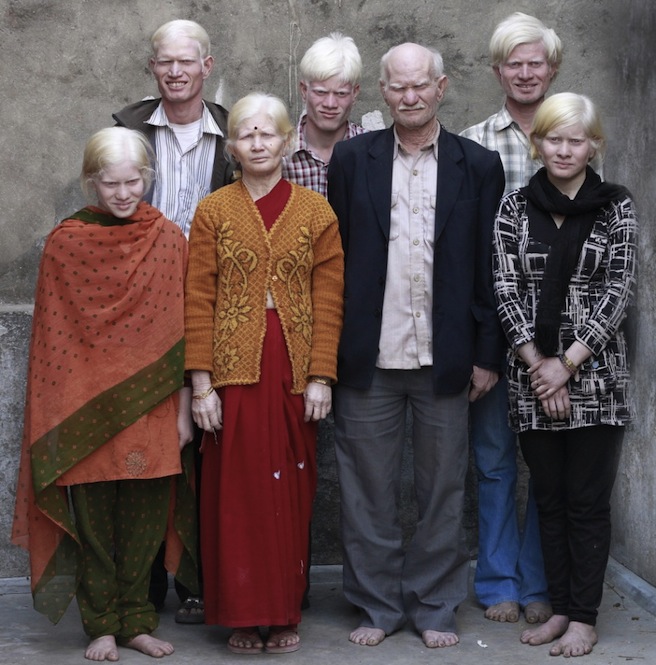
These feelings - I have been feeling them but they are also tossed up into the air, blown like dandelion seeds, by Rokia Traoré's "N'Téri". Traoré is a Malian artist, singing in Bambara, and this is from her new album. It is a gorgeous treasure of a song - seven minutes of slow waking, then the day's wakeful living. OK and then maybe the night too: the scatter of dancesteps on a clean floor, until they abruptly halt. I walked under flowering chestnut trees; I listened to "N'Téri". In both, it was easy to be seduced. To be a boss, a saucy know-it-all. To be forgetfully comfortable in Traoré's serenade, in her song's perfect rings. But no, listen: We are guests. This is faraway music, and a gift. So generous, so generous, the playing is so generous: slow bass, a kind voice, metronome guitar, then the waking glitter of electric guitar. I feel like I have been welcomed into a garden, or a magic desert, with lines of shade and white light, rainfall and sun, restful hours. A bird crosses the sky without flapping its wings. I think, Bonjour. (The bird, too, is a gift.) N'Téri is a word that means friend. My friend. This is a gift Traoré has given us. I hope one day to deserve the name. [buy] (photo is of members of Delhi's Pullan family, all of whom have albinism - source) by Sean
by Sean
There is little weakness to New History Warfare Vol 3, released this week. Its subtitle is To See More Light. Look at the cover: a black bird, rising from the wasteland. Listen to its songs, with Justin Vernon's hopeful croon. At times Stetson sounds threatened, or chased, but he never sounds doomed. Like the crow on the sleeve, these songs are ascendant. Their spirit seems puissant, victorious; whereas Vol 2 honoured - or at least held space for - fragility, Vol 3 is about gathering strength. Not mortality but immortality. The result is a forceful, handsome work. Once again, Stetson weaves his compositions from endless strings of notes, arpeggios dancing across the room. He uses the rhythms of his fingers striking the saxophone's keys, the resonating hum in the horn, a roar that comes from somewhere in his chest. Vernon is an excellent companion, subtle and undaunted; with his presence, perhaps for the first time, Stetson's music gains a sense of safety. The musician calls out, or his sax calls out, and I imagine the call rippling out over the plains or the ice, like northern lights. Unlike the saxophonist's preceding work, I can imagine his call being answered. I can imagine the hymn being heard. "Among the Sef (Righteous II)" is my favourite piece on the record. It is darting, birdlike. It flits, dives, searches. All these flickering notes, too fast to follow; the flutter of touches; the thin sound of Stetson drawing breath; then his animal voice, wordlessly lowing. I don't know if it's a prayer or a vow, and the message doesn't need to be understood. Here is a searching spirit, speaking its heart, without an audience. Like art in its purest form - a cave painting, a secret dance. A shout, a whisper, a song, for its own sake. But this record is not often so lonely. On a later track, "What Are They Doing In Heaven Today?", Stetson and Vernon turn a song by Washington Phillips inside-out. Whereas the the original is troubled and fragile, this cover is confident, saved, like a riverside revival. I don't hear any of Phillips' lonesome, unsettled asking. Take the original lyrics, where the singer is full of questions: What are they doing in heaven today?For that last line, the essence is its end. They say. Washington Phillips did not need to sing those words; he was a believer. He might have told us simply, as a promise, "Peace abounds like a river." But Phillips could not make this promise. He could not give us this certainty. When Vernon sings this chorus, "They say" feels like an afterthought. And the second question disappears. What are they doing in heaven today?Such calm confidence, such serenity, over Stetson's blanket of glimmering notes. It's a beautiful reassurance. But I don't believe in the reassurance. I feel shy writing this, as an acquaintance of Colin's, as someone who deeply respects and admires his work. If I hadn't been so moved by New History Warfare Vol 2, maybe I would be able to quietly love Vol 3 - to be bolstered by its impressive consolations. Maybe the stakes would not feel so high. Maybe if I were a believer, or a millionaire, or if society seemed like it was getting wiser, I would be able to take more solace in this album. I think the way you feel about To See More Light will depend on how much you believe in Stetson's reassurance, or how much you need it. I am happier in 2013 than I can remember ever having been before. But Stetson's earlier songs touched me more than all this gorgeous triumphing. I believed the laments more than the fanfares. I'm still grateful for both. + Postscript, May 4: I went to see Colin last night, playing at Montreal's Sala Rossa. If you are in Montreal, please find a way into his show tonight. Or else see him on tour this summer.
by Sean
--- A grateful, bellowing ovation for the Washington Wizards' Jason Collins, the first openly gay player on a major North American sports team. Elsewhere: My friend Luc built hoot.ch, a very simple, elegant digital playlist/musicblog. No writing, just Luc's careful selections, and images, in a handsome player. Press play and let it run. (Luc's taste centers on instrumental hip-hop, IDM and noisy pop.) by Sean

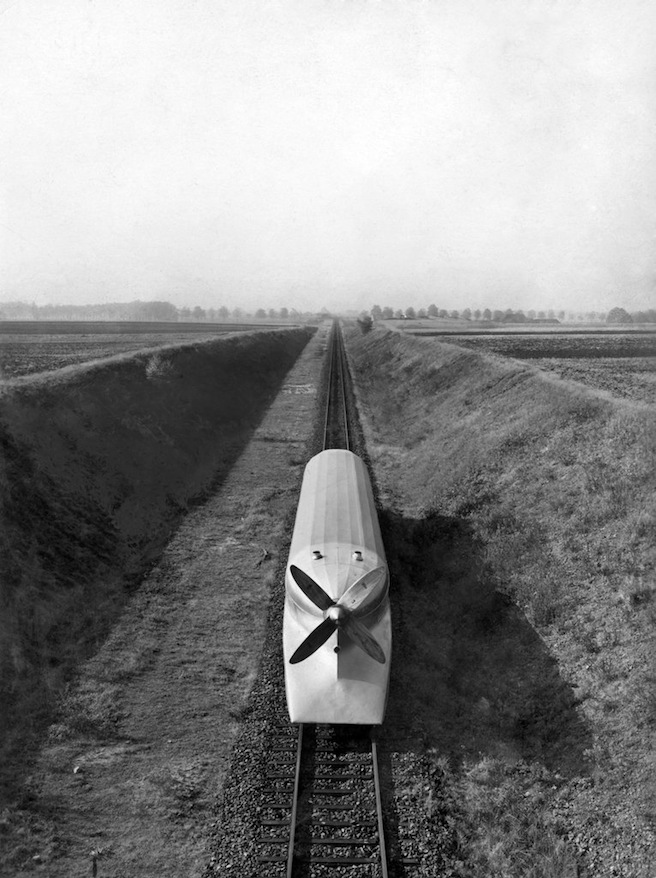
(Photo source unknown.) by Sean
see some older posts | see some newer posts |
This is a daily sampler of really good songs. All tracks are posted out of love. Please go out and buy the records.
To hear a song in your browser, click the  and it will begin playing. All songs are also available to download: just right-click the link and choose 'Save as...' and it will begin playing. All songs are also available to download: just right-click the link and choose 'Save as...'
All songs are removed within a few weeks of posting. Said the Gramophone launched in March 2003, and added songs in November of that year. It was one of the world's first mp3blogs. If you would like to say hello, find out our mailing addresses or invite us to shows, please get in touch: Montreal, Canada: Sean Toronto, Canada: Emma Montreal, Canada: Jeff Montreal, Canada: Mitz Please don't send us emails with tons of huge attachments; if emailing a bunch of mp3s etc, send us a link to download them. We are not interested in streaming widgets like soundcloud: Said the Gramophone posts are always accompanied by MP3s. If you are the copyright holder of any song posted here, please contact us if you would like the song taken down early. Please do not direct link to any of these tracks. Please love and wonder. "And I shall watch the ferry-boats / and they'll get high on a bluer ocean / against tomorrow's sky / and I will never grow so old again."
about the authors
Sean Michaels is the founder of Said the Gramophone. He is a writer, critic and author of the theremin novel Us Conductors. Follow him on Twitter or reach him by email here. Click here to browse his posts.
Emma Healey writes poems and essays in Toronto. She joined Said the Gramophone in 2015. This is her website and email her here. Jeff Miller is a Montreal-based writer and zinemaker. He is the author of Ghost Pine: All Stories True and a bunch of other stories. He joined Said the Gramophone in 2015. Say hello on Twitter or email. Mitz Takahashi is originally from Osaka, Japan who now lives and works as a furniture designer/maker in Montreal. English is not his first language so please forgive his glamour grammar mistakes. He is trying. He joined Said the Gramophone in 2015. Reach him by email here. Site design and header typography by Neale McDavitt-Van Fleet. The header graphic is randomized: this one is by Matthew Feyld.
PAST AUTHORS
Dan Beirne wrote regularly for Said the Gramophone from August 2004 to December 2014. He is an actor and writer living in Toronto. Any claim he makes about his life on here is probably untrue. Click here to browse his posts. Email him here.
Jordan Himelfarb wrote for Said the Gramophone from November 2004 to March 2012. He lives in Toronto. He is an opinion editor at the Toronto Star. Click here to browse his posts. Email him here.
our patrons
Said the Gramophone does not take advertising. We are supported by the incredible generosity of our readers. These were our donors in 2013.

search
Archives
elsewhere
our favourite blogs
(◊ means they write about music) Back to the World La Blogothèque ◊ Weird Canada ◊ Destination: Out ◊ Endless Banquet A Grammar (Nitsuh Abebe) ◊ Ill Doctrine ◊ A London Salmagundi Dau.pe ◊ Words and Music ◊ Petites planètes ◊ Gorilla vs Bear ◊ Herohill ◊ Silent Shout ◊ Clouds of Evil ◊ The Dolby Apposition ◊ Awesome Tapes from Africa ◊ Molars ◊ Daytrotter ◊ Matana Roberts ◊ Pitchfork Reviews Reviews ◊ i like you [podcast] Musicophilia ◊ Anagramatron Nicola Meighan ◊ Fluxblog ◊ radiolab [podcast] CKUT Music ◊ plethoric pundrigrions Wattled Smoky Honeyeater ◊ The Clear-Minded Creative Torture Garden ◊ LPWTF? ◊ Passion of the Weiss ◊ Juan and Only ◊ Horses Think White Hotel Then Play Long (Marcello Carlin) ◊ Uno Moralez Coming Up For Air (Matt Forsythe) ftrain my love for you is a stampede of horses It's Nice That Marathonpacks ◊ Song, by Toad ◊ In Focus AMASS BLOG Inventory Waxy WTF [podcast] Masalacism ◊ The Rest is Noise (Alex Ross) ◊ Goldkicks ◊ My Daguerreotype Boyfriend The Hood Internet ◊ things we like in Montreal eat: st-viateur bagel café olimpico Euro-Deli Batory le pick up lawrence kem coba le couteau au pied de cochon mamie clafoutis tourtière australienne chez boris ripples alati caserta vices & versa + paltoquet, cocoa locale, idée fixe, patati patata, the sparrow, pho tay ho, qin hua dumplings, café italia, hung phat banh mi, caffé san simeon, meu-meu, pho lien, romodos, patisserie guillaume, patisserie rhubarbe, kazu, lallouz, maison du nord, cuisine szechuan &c shop: phonopolis drawn + quarterly + bottines &c shows: casa + sala + the hotel blue skies turn black montreal improv theatre passovah productions le cagibi cinema du parc pop pmontreal yoga teacher Thea Metcalfe (maga)zines Cult Montreal The Believer The Morning News McSweeney's State The Skinny community ILX |


Absolutely brilliant sleight of hand, here, Sean.